The Missing Piece: PEOPLE
But why? Because the people are being ignored
AI adoption is proven to be more successful when training has been provided on how to best use it, and when there is cohesion and collaboration in a team when implementing it.
A MIT study shows that those
95% of businesses that have failed to adopt AI technology failed due to:
- brittle workflows,
- lack of contextual learning, and
- misalignment with day-to-day operations.
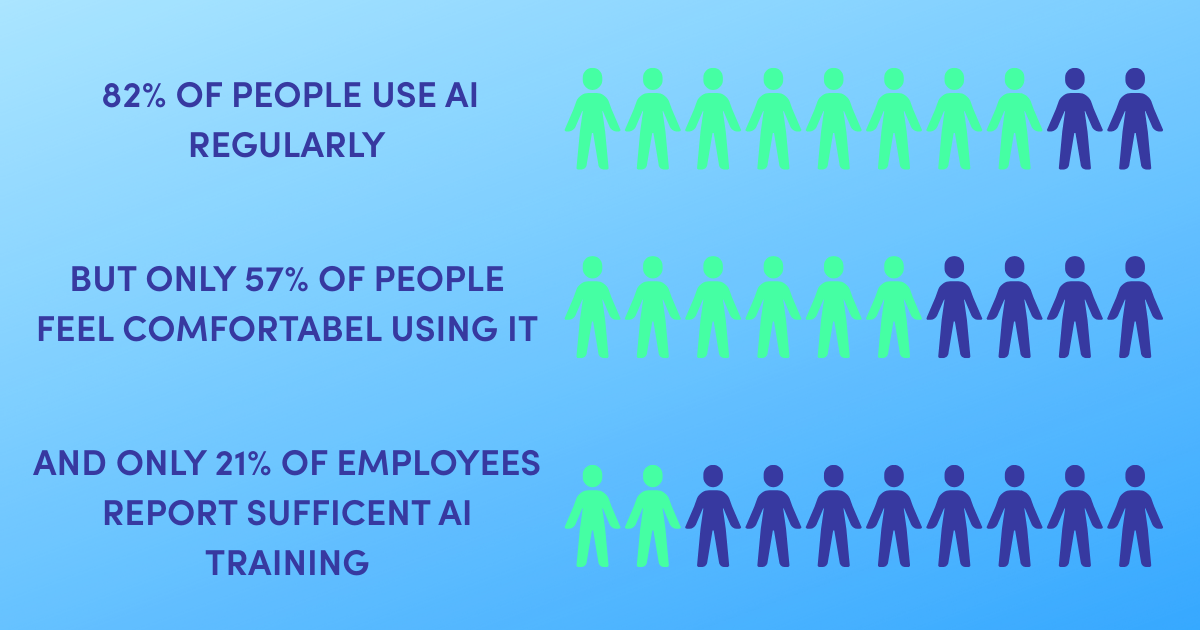
This misalignment in AI training and adoption is reinforced by a BCG study. The study identified that there was a significant skills gap between the corporate leaders and the frontline employees. The study found that 83% of managers and leaders use AI at work regularly, but only 21% of employees reported that they received sufficient training to use AI effectively.
A glimmer of hope
It’s not looking all bad for AI and businesses; however, small-scale use of AI has proven to be successful. On an individual employee level, tools such as AI calendars, email dictation, and the automation of mundane, repetitive tasks have increased employee performance. A recent LSE study found that GenAI can save on average 7.5 hours a week of working time. This is almost a whole day that can be spent doing something much more worthwhile!
Fear, Fiction and the Trust Gap
A question that arises when we look at these studies is, why are people so hesitant to use AI?
A major issue is distrust. Although 82% of people have used AI, only 57% feel comfortable with it - one of the lowest confidence rates in the study. The topics of concern are typically centred around trust, privacy and control.
We have embedded a recurring cultural reaction to innovation, often rooted not in technology itself but in fears about its social consequences (job loss, dehumanisation, loss of control). Just think Mary Shelley’s Frankenstein, 2001: A Space Odessy and Ex Machina. As we move forward, there needs to be much more education on changing long-established mindsets and behaviours.
While film and TV dramatise AI, news media have also played a role in reinforcing concerns. Journalists have been on top of the ball when it comes to reporting on the failures of AI. While it is important for people to understand the limitations and failures that the technology has experienced - and not place all the blame for the failures on people - it has also been criticised for over-reporting on the subject for click-bait.
A People-First Path Forward
Let’s go back to the beginning. Why is AI adoption failing?
It’s because of the people using it - or more accurately - the lack of support they receive. AI technology being introduced into businesses is rarely introduced properly within organisations, and the goals it is meant to achieve are often unclear. This lack of clarity and training, combined with fears fuelled by media narratives, creates resistance from the very start. This ultimately leads to failure.
So, what do we do moving forward? Work with people.
The key takeaway is that successful AI integration requires a people-focused approach. Change management helps ensure teams are prepared, supported, and confident from the outset.
Through role-specific training and open discussion around concerns, AI is far more likely to become a positive and productive addition to the workplace. Change management can also help dismantle harmful narratives around AI by creating space for honest conversation and education.