Driving Better Bus Performance Through Data
About this project:
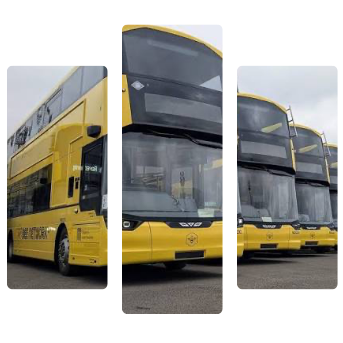
Discover how data-driven analysis helped Metroline Manchester uncover opportunities to optimise bus routes and improve network performance.
"The breadth of industries, sectors and types of organisations that we work with means that we're able to place students aligned to your business goals, mission and values"
Marie May
Head of Nurture
- Reach out to Marie to find out how Nurture can help your business to achieve goals

Executive Summary
AI Predictive Model | Forecasting
Objective:
Identify underperforming bus routes, understand the causes of poor performance and uncover practical opportunities to improve network reliability and efficiency.
Solution:
Combined data analysis, operational observations and stakeholder insight to assess route performance, identify trends and develop evidence-based recommendations.
Results:
Provided clearer insight into route performance, strengthened data-driven decision-making and identified opportunities to improve operational performance and customer outcomes.
Challenge
Solution
Outcome
Metroline Manchester operates over 230 bus routes across four depots as part of the Bee Network in Greater Manchester. Since commencing operations in January 2025, the business has focused on delivering reliable and punctual services whilst continuously improving network performance.
One of the key challenges faced by the business is identifying the root causes of poor performance across a large and complex network. Whilst large amounts of operational data are available through Ticketer and other systems, converting this information into actionable insights that support service improvements can be difficult and time-consuming.
The business needed a structured approach to identify the worst-performing routes within each depot, understand the operational and financial impact of poor performance, and determine whether practical, cost-neutral improvements could be made. There was also an opportunity to improve the way performance interventions and service curtailments were assessed, ensuring decisions taken by controllers and performance teams could be measured against both business outcomes and customer impact.
The challenge required a combination of data analysis, operational understanding and real-world observation to identify meaningful opportunities for improvement and support future service development.
Identifying the barriers to better network performance
The student worked closely with operational managers and performance teams to analyse data from Ticketer and other available sources, identifying key trends affecting punctuality, reliability and overall network performance.
Using a combination of data analysis and operational investigation, the student reviewed route-level performance, assessed the financial implications of poor performance and explored opportunities for network optimisation. This involved examining live running data, reviewing service punctuality, understanding route infrastructure challenges and conducting operational observations to better understand traffic conditions, congestion hotspots and service reliability issues.
The student also explored opportunities to develop processes for auditing service curtailments and performance interventions, helping the business better understand the value and effectiveness of decisions taken during periods of disruption. Findings were presented to operational stakeholders throughout the project, allowing recommendations to be challenged, refined and aligned with operational requirements.
The project ultimately combined analytical thinking with practical operational insight, supporting Metroline Manchester's commitment to continuous improvement and providing evidence-based recommendations that can inform future scheduling, service development and funding proposals.
Combining data and operational insight to uncover opportunities
1. Improved Route Performance Insight
Provided a structured methodology for identifying the poorest-performing routes by depot and understanding the underlying causes affecting punctuality and reliability.
2. Enhanced Decision Making
Supported management teams with data-driven recommendations and evidence that can be used to inform service improvement proposals, funding requests and operational interventions.
3. Greater Understanding of Service Curtailments
Helped explore mechanisms for measuring the impact of network management decisions, balancing customer experience, operational performance and financial outcomes.
Turning analysis into smarter decisions and improved performance
Client Testimonial
"The Nurture Programme has provided a valuable opportunity to combine fresh analytical thinking with real operational challenges. The project supported our ambition to better understand network performance, identify improvement opportunities and strengthen data-driven decision making across the business. The student demonstrated a proactive approach, strong analytical capability and a genuine willingness to understand the complexities of operating a large public transport network. I would highly recommend the Nurture Programme to other organisations seeking meaningful project outcomes while helping develop future talent."
Rob Pycock
Network Performance Manager
Metroline Manchester