Microsoft Fabric in 2026
Unified Analytics, Built for Speed, Trust, and Scale
In this article, our newly appointed Technical Consultant | Lead Data Engineer, Urvik, explores how Microsoft Fabric has evolved into a production-ready analytics operating model.
By January 2026, Microsoft Fabric has transitioned from an ambitious vision to a proven, enterprise-grade analytics platform. In a market long defined by fragmented tools and architectural trade-offs, Fabric’s defining contribution is cohesion: one data foundation, multiple workloads, and a single path from raw data to trusted insights.
A Platform Built Around Unification
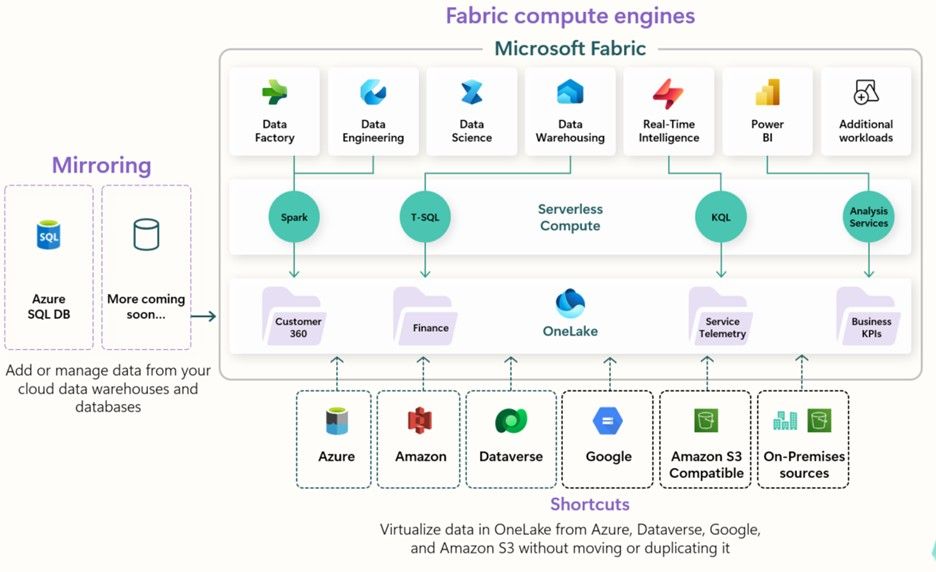
Fabric is designed to unify analytics workflows rather than assembling disconnected services. At the heart of the platform is OneLake, a single organisation-wide data lake that eliminates duplication and reduces friction between teams. Data engineering, SQL analytics, real-time processing, and business intelligence operate over the same data, using tools best suited to each role, without repetitive reshaping or copying.
Impact on Team Productivity
Traditional stacks require coordination across pipelines, transformation layers, warehouses, and BI extracts. Each boundary introduces latency and overhead. Fabric collapses these boundaries, allowing Spark notebooks, SQL endpoints, and Power BI to work directly over the same Lakehouse data. The result: a shorter path from ingestion to insight and fewer opportunities for inconsistency.
Performance Without Architectural Compromise
Performance has historically forced trade-offs: flexibility versus speed, freshness versus simplicity. Fabric addresses these challenges by integrating compute engines with shared storage. Direct Lake, now a core capability, enables Power BI to query Lakehouse data directly while maintaining interactive performance and near-real-time freshness.
Analysts no longer wait for scheduled imports, and BI teams avoid managing parallel datasets for speed. Performance is delivered as part of the platform, not as a separate optimisation exercise.
Engineering Productivity as a First-Class Goal
Fabric’s fully managed SaaS approach abstracts away infrastructure overhead, freeing teams to focus on data quality, logic, and outcomes. For organisations modernising from legacy SQL Server or complex cloud architectures, this simplification accelerates onboarding, reduces moving parts, and increases delivery velocity..
Cost Efficiency Through Consolidation
In 2026, cost efficiency is measured not just by compute pricing, but by architectural waste. Many analytics stacks still duplicate storage, transformations, and semantic models across tools. Fabric’s shared storage and unified semantic approach reduce this redundancy. By consolidating workloads into a single platform, organisations lower total cost of ownership while gaining clearer visibility into usage and consumption.
Governance and Trust at Scale
As analytics estates grow, governance becomes a limiting factor. Fabric embeds governance directly into the platform, rather than layering it on later. Centralised access control, shared semantic models, and integrated monitoring help maintain a single version of the truth across engineering and BI workloads. This native approach to governance has become a key differentiator, particularly for large and regulated organisations.
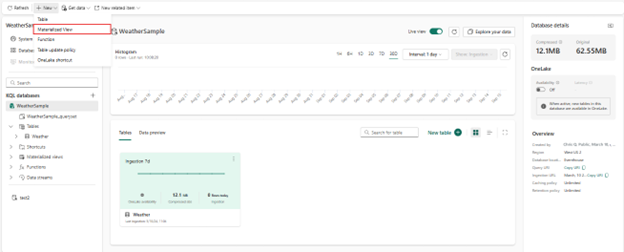
Materialised Views: Performance by Design
Materialised views allow teams to define precomputed results using SQL, reducing repeated computation for frequently queried logic. These views improve consistency, bridging the gap between flexibility and performance across Spark, SQL, and BI workloads.
In Lakehouse environments, this capability bridges the gap between flexibility and performance. Heavy joins and aggregations that once strained interactive analytics can now be served from optimised, precomputed representations. Importantly, materialised views also improve consistency.
Business logic defined once can be reused across Spark, SQL, and BI workloads, reducing duplication and the risk of divergent calculations.
Materialised views fit naturally into Fabric’s broader philosophy: performance should be a platform responsibility, not an engineering burden. Teams gain faster queries and more predictable behavior without adding operational complexity.
A Platform Setting the Market Baseline
By 2026, Microsoft Fabric competes as a cohesive platform, not just a collection of features. Its strength lies in unified storage, integrated compute, native BI, built-in governance, and intelligent performance optimisation.
The shared environment reduces friction, shortens feedback loops, and supports broader self-service analytics. Engineering, analyst, and business teams can collaborate effectively without duplicated logic, enabling faster, more trustworthy data-driven decision-making.
Fabric’s Lasting Impact
Microsoft Fabric has redefined expectations for modern analytics. By providing speed, trust, and scale, Fabric enables organisations to unify technical workflows and empower broader teams with reliable, self-service insights—setting a new standard for 2026 and beyond.
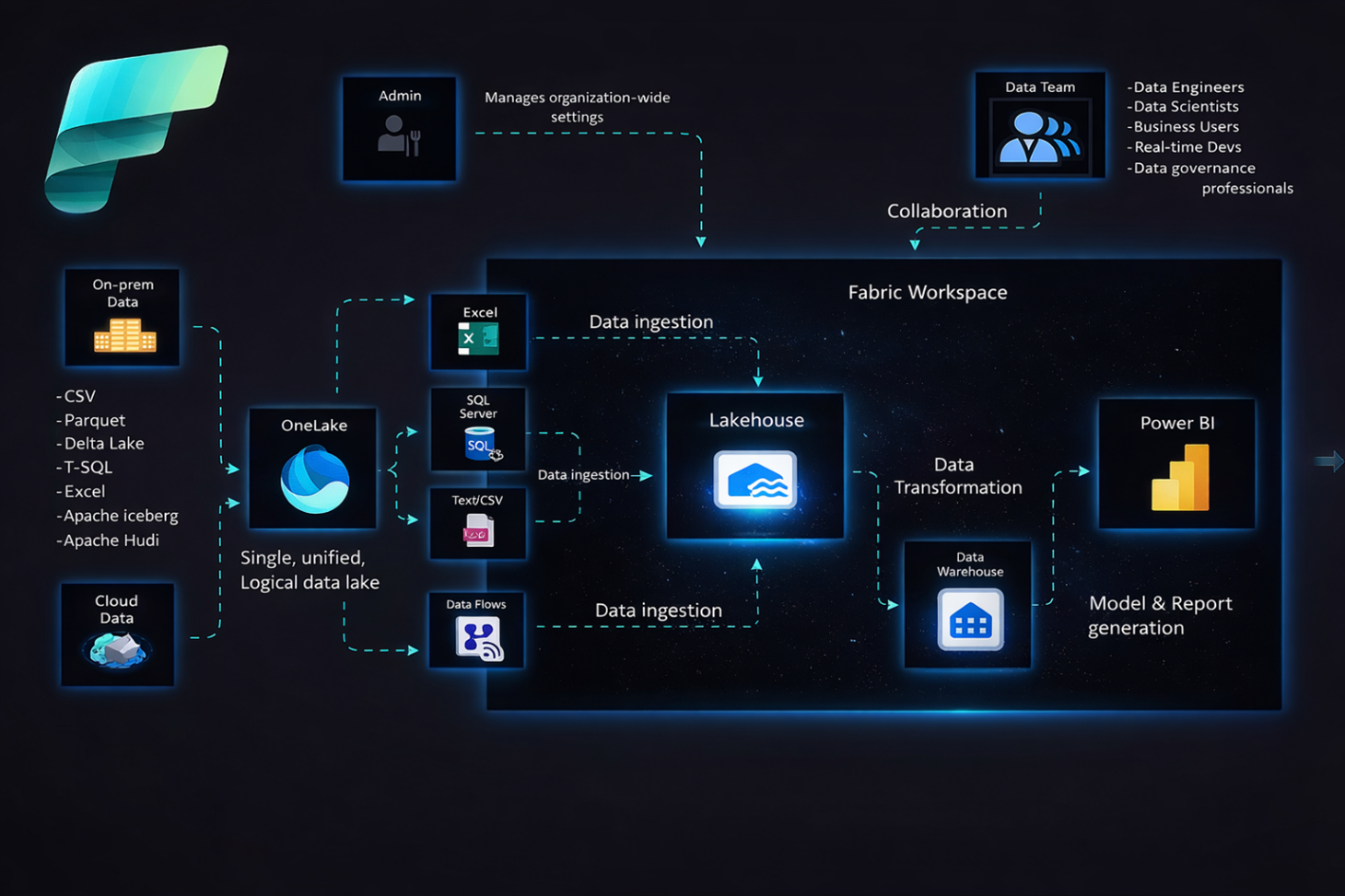
A unified view of Microsoft Fabric, showing how OneLake, Lakehouse, and Power BI work together to turn diverse data sources into governed, enterprise-ready insights.
Curious how Microsoft Fabric could transform your analytics capabilities? Get in touch with Eden Smith to explore unified, high-performance, and governed analytics solutions designed to scale with your organisation.